Hello, I’m Cleo Dolby, Co-production Lead for adult social care at Worcestershire County Council. I am also the new co-chair of the co-production Leads group at West Midlands ADASS.
My experience in co-production began in the 1990s when a small local Surrey newspaper advertised for Development Workers for a pilot scheme. The scheme was to trial disabled people receiving direct payments on behalf of Surrey County Council in place of care and support.
This would enable them to have choice and control over who provided their support and how and when they chose to do basic things we take for granted such as showering and getting dressed. Disability rights activists were campaigning for Direct Payments legislation at this time, which became law in 1996. I was very fortunate that my counterpart in the trial scheme was himself a disability rights activist, the sadly now deceased, Nick Danagher. Nick lived and breathed co-production as someone who was a disability rights activist and also a disabled person who employed personal assistants.
We developed links with counterparts around the country and we shared practice with each other. We learnt a lot from colleagues who were trailblazers at that time at Centres for Independent Living in Hampshire, West of England, Kingston and Manchester.
We supported a group of disabled people to set up a Disabled People’s Organisation to deliver direct payments support. That organisation was Surrey Independent Living Council, now known as Surrey Independent Living Charity. This organisation has held the contract for direct payments support since it began in the 1990’s. I suspect my current colleagues may be fed up of hearing about Surrey in the 90’s! but it was an inspiring time, and I still draw on my experience from that period now.
Worcestershire County Council has been working in co-production in some areas very well over many years. However, previous attempts to embed co-production across all adult social care have been projects which have come to an end.
I was excited when a newfound commitment to embedding co-production permanently emerged a few years ago. Having mentioned my previous experience in Surrey in the 90s with great enthusiasm, I was fortunate to be included in conversations about what co-production in adult social care looks like. I felt it was important for there to be a place where people with lived experience of adult social care can come together as a group with it’s own identity. That group can then work collaboratively with social care to make improvements. My role as co-production lead is to be an ally to that group in working with the council.
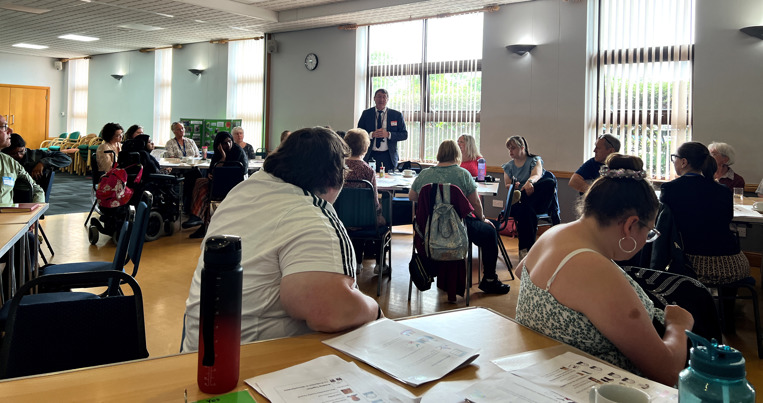
As I had found it beneficial having a group of counterparts to share practice with previously, I also sought out colleagues to share ideas within this role. Initially the group was informal, without any agenda and was for spontaneous discussion and sharing. However, with the help of Keymn Whervin, it now includes all the regional Leads and is more structured. It’s really useful to have the West Midlands ADASS Co-production Leads group, to be able to check things out with colleagues both in the meeting and in-between sessions.
I am fortunate that at Worcestershire County Council our Director, Assistant Director and Principal Social Worker are all committed to genuine co-production.
It is now expected that if we are delivering training for social work teams, there will be co-production with people with relevant lived experience where possible. People with lived experience were recently supported to evaluate and score a tender for training alongside professionals.
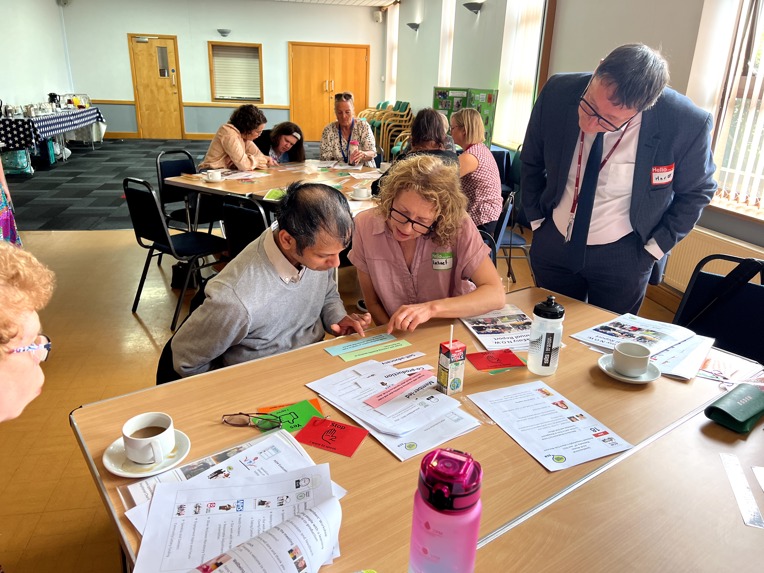
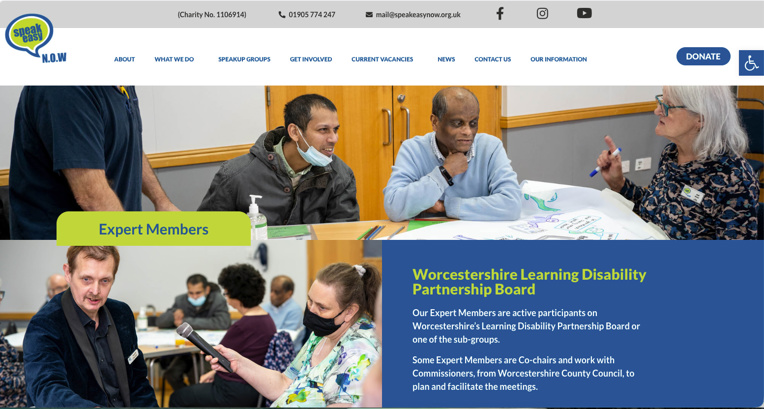
We have co-produced Easy Read versions of assessment and support plan documents. I was invited to speak at an AGM of one of our local advocacy organisations for people with learning disabilities, Speak Easy Now, as they want to celebrate all the co-production we do together which I see as a real compliment.
The most important part of my role is modelling genuine power sharing. It doesn’t feel radical to me: it is genuine co-production.